
What is hyperloop?
A clear introduction to hyperloop, how the concept works and what still needs to be researched.
The idea behind hyperloop
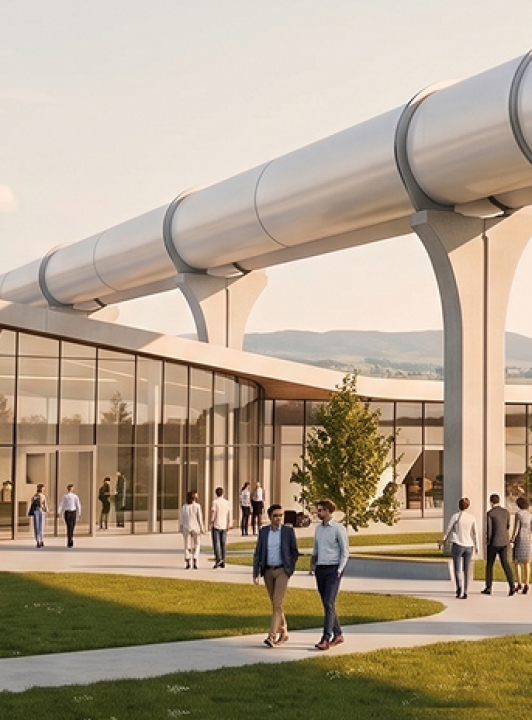
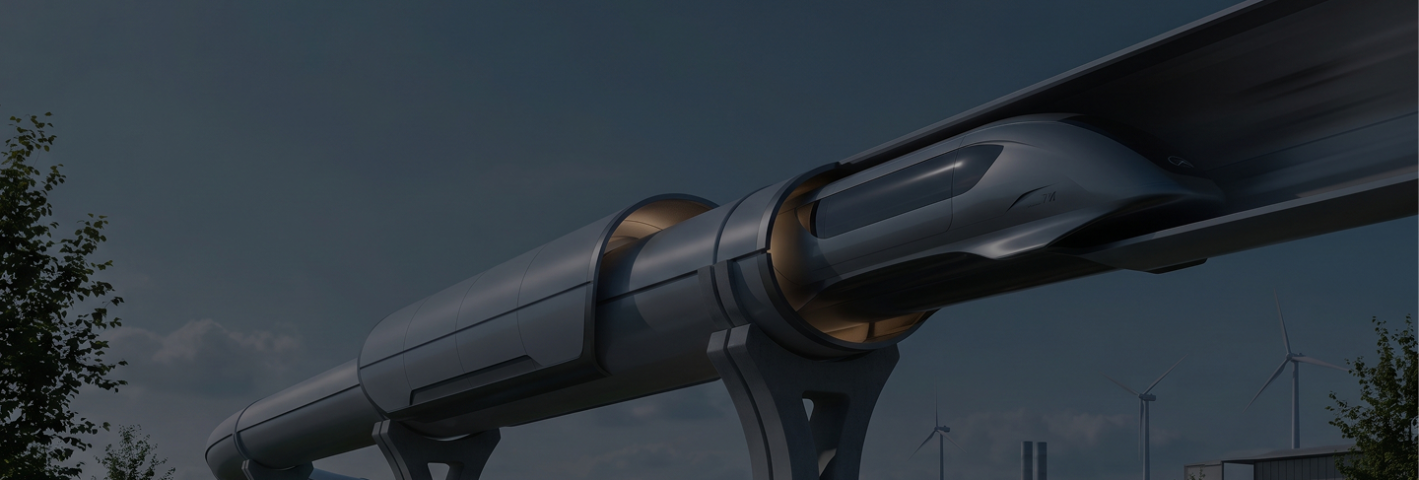
Hyperloop is a transport concept in which passenger or cargo vehicles could travel through a low-pressure tube environment. Concepts typically combine electric propulsion with technologies that reduce mechanical contact, such as magnetic levitation or guidance. Lower air resistance and reduced friction could support efficient high-speed movement, but the complete system is still being researched and is not yet a widely deployed commercial transport mode.
How does the basic idea work?
Vehicles moving at higher speeds must overcome increasing air resistance. Hyperloop concepts aim to reduce that resistance by placing the vehicle in a tube where the air pressure is much lower than outside.
Some concepts also reduce physical contact between vehicle and guideway. Electric propulsion can then accelerate and control the vehicle.
Key takeaways
Hyperloop uses a low-pressure environment to reduce air resistance.
Levitation or guidance can reduce physical contact and friction.
A complete system requires many technologies to work together.
Hyperloop is still being researched and is not yet a widely deployed commercial transport mode.
Which technologies are involved?
The challenge is not only making each component work. The components must work together safely and reliably.
Low-pressure infrastructure: The tube that reduces air resistance.
Levitation & guidance: Less contact, less friction.
Electric propulsion: Accelerating and controlling the vehicle.
Sensors & digital control: Monitoring and steering in real time.
Communication & switching: Connecting vehicles, routes and systems.
Safety & emergency systems: Prepared for every situation.
What could hyperloop be used for?
Research explores possible applications for passengers and freight. Potential use cases may include longer-distance connections or links between logistics hubs.
These possibilities should not be presented as guaranteed applications. Infrastructure requirements, costs, safety, environmental impact, demand and integration with existing transport all need to be evaluated.
Where is the technology today?
Hyperloop remains in development. Research organisations and companies continue to test technologies, subsystems and prototypes. The current task is to build evidence: what performs as expected, what still needs improvement and under which conditions a future application could create value.
Frequently asked questions
Quick answers about the project, hyperloop technology and how to take part.
Still have questions?
Contact usNo. Although both are ground-based transport concepts, hyperloop uses a low-pressure tube environment and may use different levitation, propulsion and control technologies.
There is no widely deployed commercial hyperloop passenger network. Research and testing are still ongoing.
Testing helps validate technical assumptions, identify safety and reliability issues and understand how separate subsystems behave together.