
Turn your knowledge into real-world experience
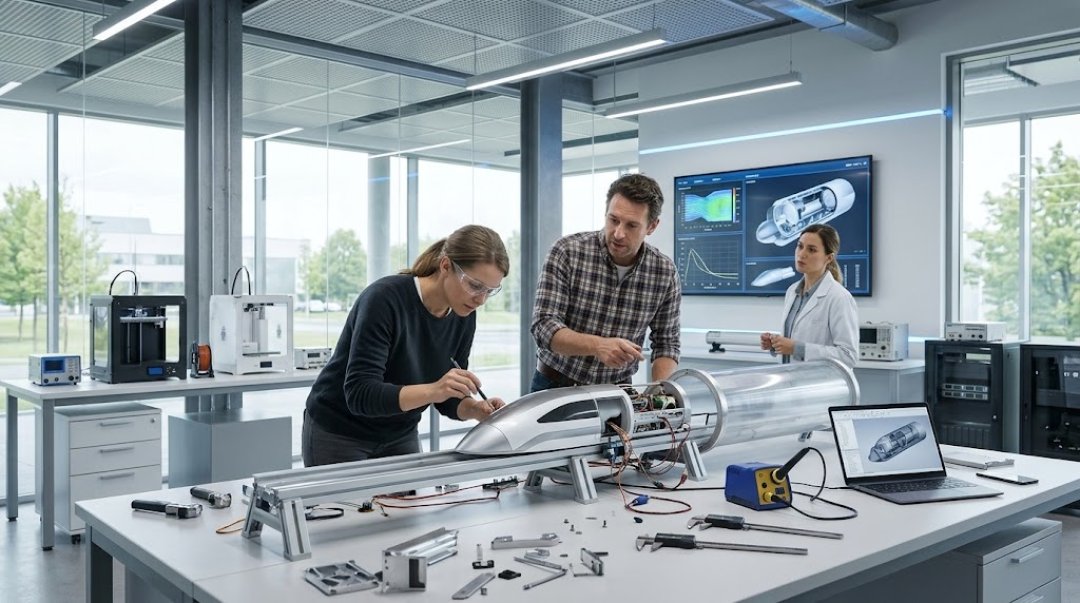
Hyperloop gives students an interdisciplinary setting in which to apply engineering, software, sustainability, communication, business, policy and design skills. Because the technology is still being developed, students can work on real open questions rather than only studying finished systems. HyperBRIDGE connects these learning opportunities with research organisations, companies and the wider network.
Many disciplines, one challenge
Potential fields include mechanical engineering, electrical engineering, embedded systems, data, control, safety, infrastructure, sustainability, communication, human experience, business and policy.

Work on a real research question
Strong student projects should start with a defined problem and an accountable supervisor. Examples may include testing a subsystem, analysing environmental impact, improving an educational experience or mapping SME capabilities.
Build professional context
Students want to understand whether an emerging sector is credible and where they fit. Link learning content to real organisations, experts, projects and research rather than only futuristic imagery.
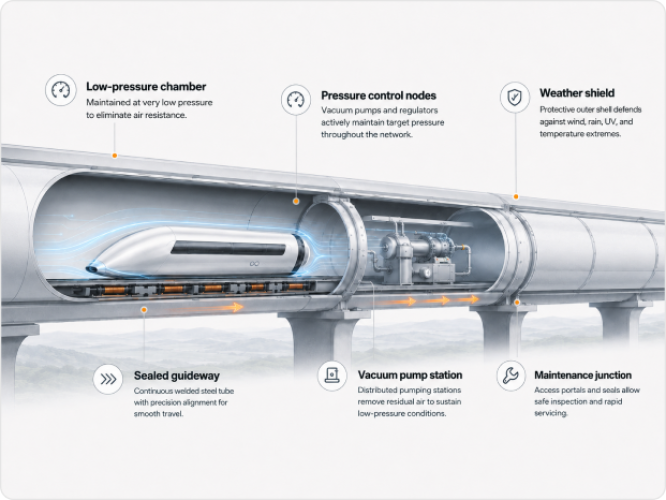
Vacuum efficiency analysis paper
A research paper analysing energy trade-offs of maintaining low-pressure tubes at scale, with recommendations for pump scheduling.
Read paper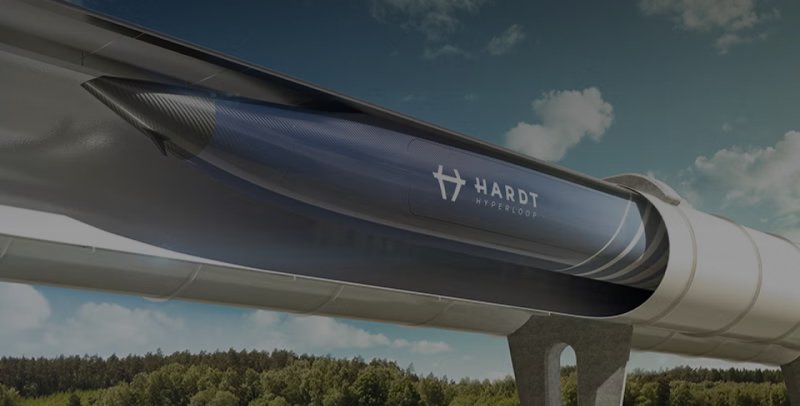
AR maintenance walkthrough
An augmented-reality prototype guiding technicians through pod maintenance procedures with step-by-step overlays.
View project
Homesourcing
A logistics study on distributing hyperloop component manufacturing to regional partners to shorten supply lines.
View project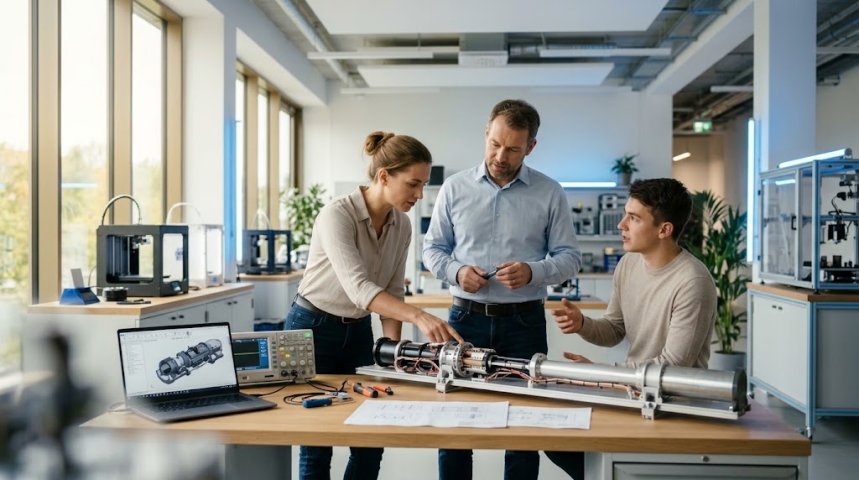
Build a network while you learn
Internships, events, research projects and student challenges can create direct contact with companies and knowledge institutions.
Explore internshipsTake skills with you
Systems thinking, interdisciplinary collaboration and working with uncertainty are useful across many technology and mobility sectors.
Key takeaways
Students from technical and non-technical disciplines can contribute.
Projects should be based on real questions and supervision.
Professional credibility grows through real cases and organisations.
Skills remain relevant beyond hyperloop.
Frequently asked questions
Quick answers about the project, hyperloop technology and how to take part.
Still have questions?
Contact usEngineering, ICT, data, sustainability, design, communication, policy and business can all connect to future mobility research.
Available graduation projects should be listed on the internships and graduation projects page. Students can also contact the network with a relevant research interest.
It is an emerging field, so opportunities and organisations can change. The site should present current openings and avoid implying guaranteed sector growth.