
What role could you play in future mobility?
There is no single route into future mobility. A hyperloop-related project can involve mechanical and electrical engineering, software, sensors, data, safety, infrastructure, sustainability, design, communication, policy and business. Exploring these disciplines helps students and young professionals identify where their interests and skills may fit without suggesting that one specific career path is guaranteed.
What are the possibilities?
Engineering and systems
Mechanical engineering
Electrical engineering
Mechatronics
Materials
Systems engineering
Infrastructure
Safety engineering
Software, data and control
Embedded systems
Software development
Data science
Cybersecurity
Sensors
Automation
Control systems
Sustainability and society
Environmental research
Mobility studies
Policy
Human factors
Public engagement
Communication
Responsible innovation
Business and project development
Innovation management
Supply chains
Business development
Entrepreneurship
Project management
Partnership development
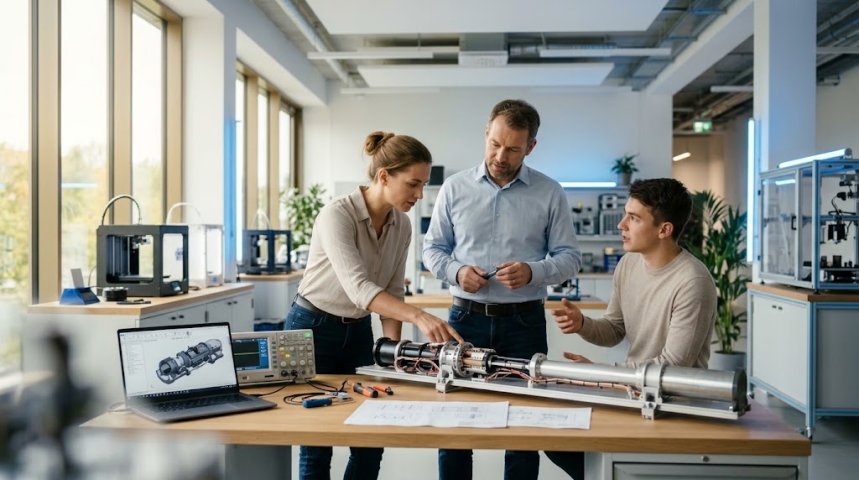
How to choose a direction
Start with the type of problem you enjoy solving. Do you like building physical systems, working with data, understanding environmental impact or connecting people? Then explore relevant studies, professionals, projects and internships.
Explore opportunitiesKey takeaways
Future mobility is multidisciplinary.
Career pages should connect roles to real skills and studies.
Users need pathways, not vague inspiration.
Current vacancies should be separated from long-term career examples.

Frequently asked questions
Quick answers about the project, hyperloop technology and how to take part.
Still have questions?
Contact usThe role depends on the discipline. Engineers may work on structures, propulsion, levitation, electronics, sensing, safety or systems integration.
Yes. Research, sustainability, policy, communication, design, business and education are also relevant.
Compare the problems and skills associated with each discipline, then explore study programmes and practical experiences such as workshops or internships.